
📌 Introduction: A Day That Didn’t Feel Normal
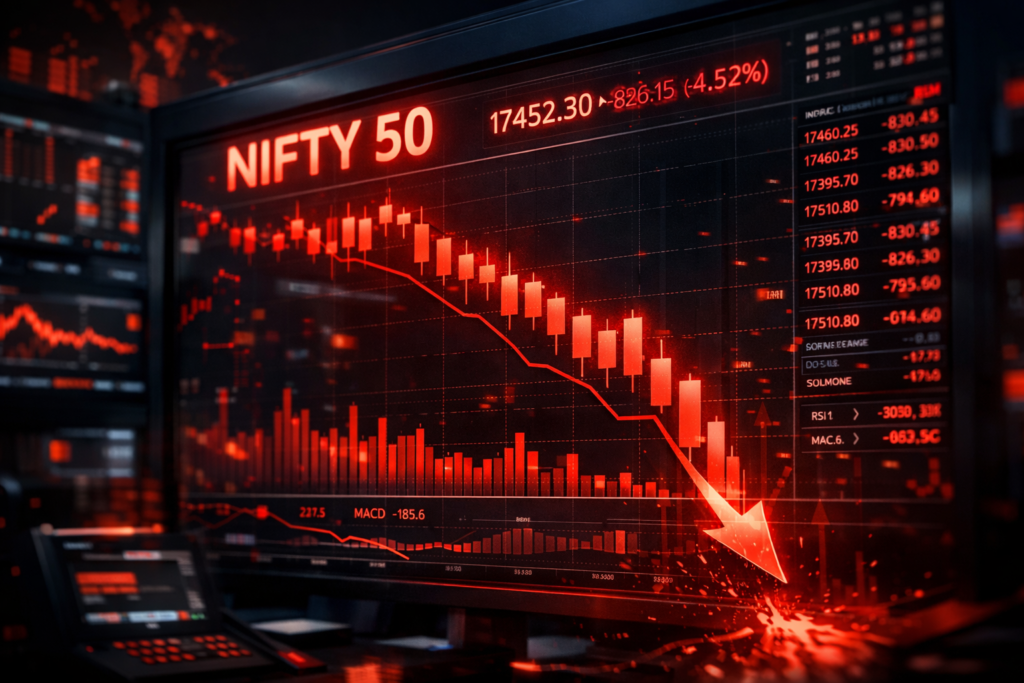
Early morning, Person A opened the chart expecting a normal trading day.
Everything looked fine at first. No major news. No panic headlines.
But within minutes, something changed.
The candles started turning red. One after another.
Person B, sitting in a completely different city, noticed the same thing.
Without any communication, both of them made the same decision:
They stopped.
Because experienced traders don’t react first — they observe first.
What happened today in the NIFTY 50 was not random.
It was a combination of global pressure, institutional behavior, and human psychology.
This article breaks everything down — simply, clearly, and deeply.
📊 What Exactly Happened in NIFTY 50 Today?
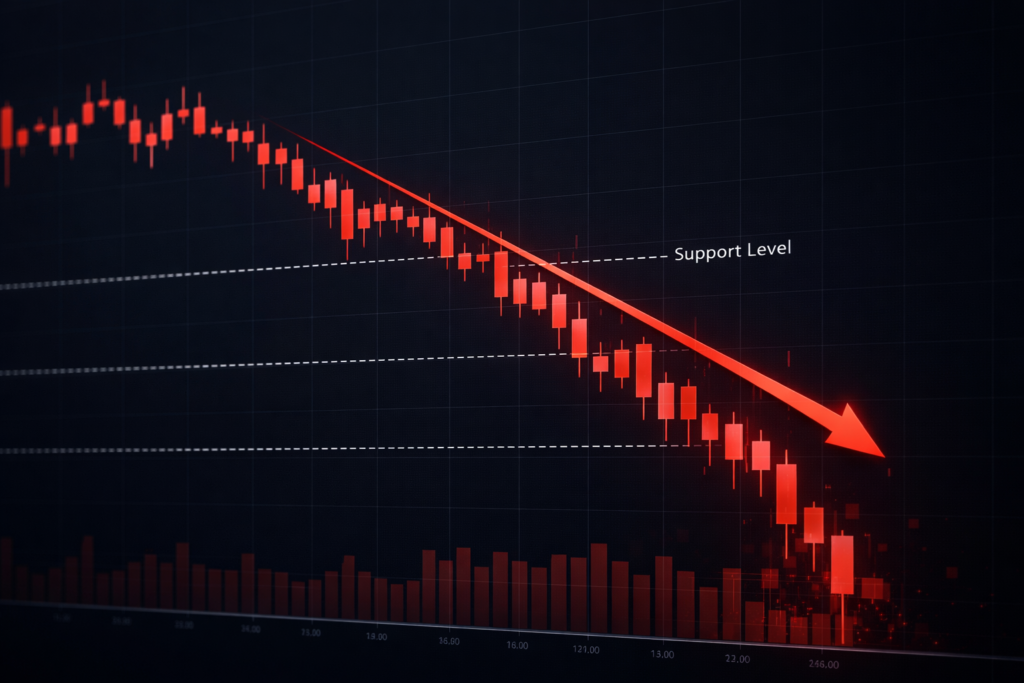
Today’s fall in the market was not limited to one sector.
It was broad.
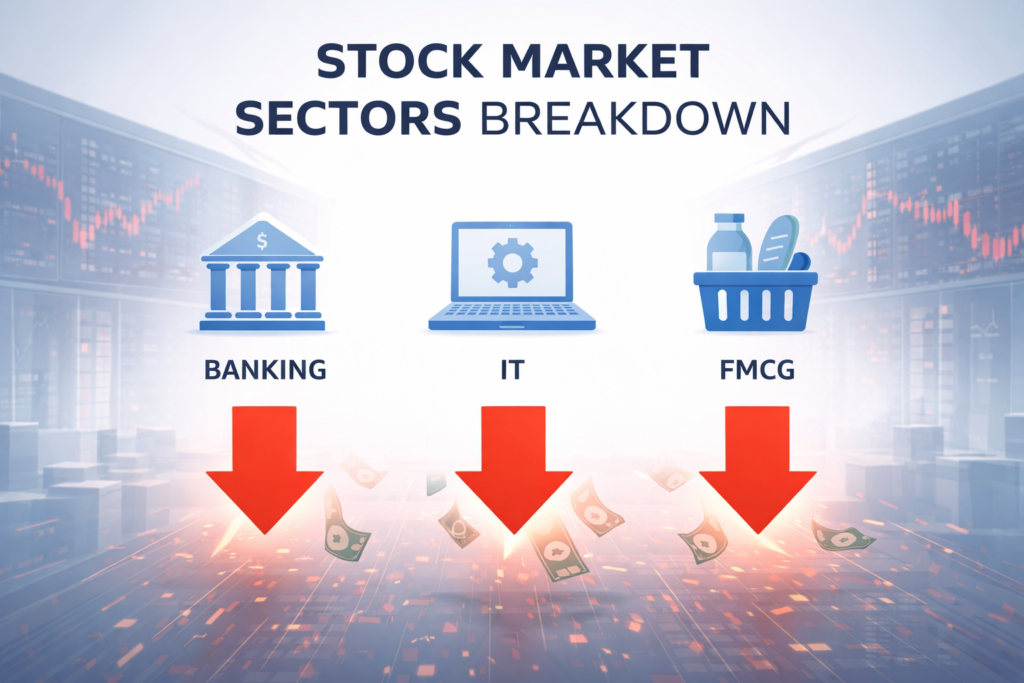
- Banking stocks declined
- IT sector weakened
- FMCG showed pressure
- Midcap and smallcap stocks fell sharply
This kind of movement usually indicates one thing:
👉 Institutional-level selling
Not emotional retail selling.
🧠 Story: The First Sign Nobody Talks About
Person X noticed something before the market fell.
Volume increased.
But price didn’t move much.
That’s the first hidden signal.
Big players don’t sell in panic.
They sell quietly.
And when they finish selling…
The market falls.
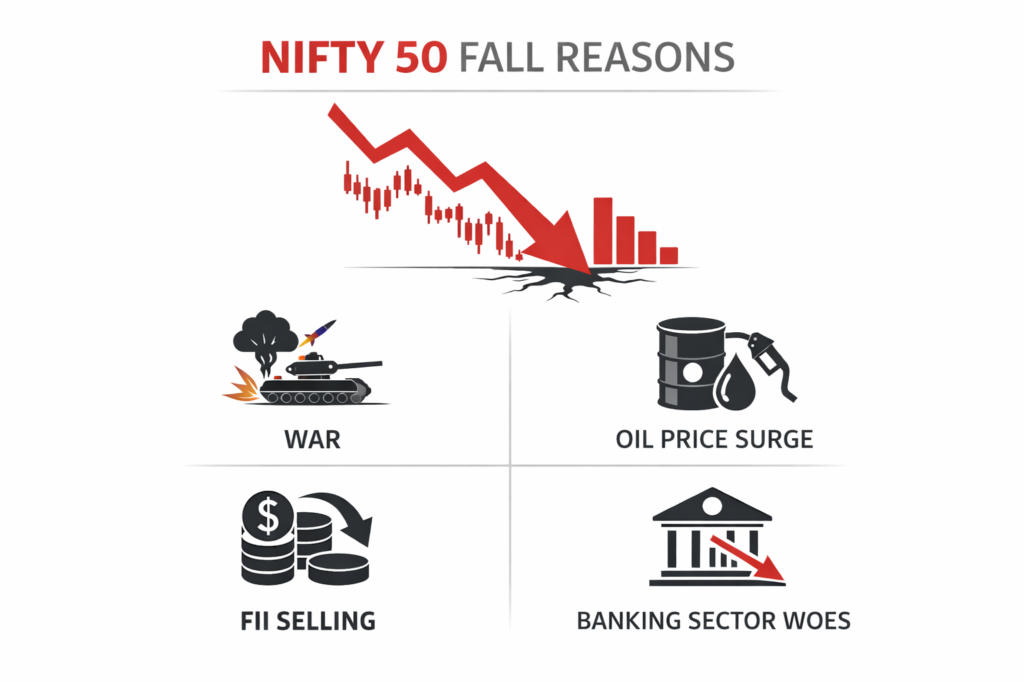
🌍 Global War Impact on Stock Market
Let’s talk about the biggest reason.
👉 Global geopolitical tension.
War or even the fear of war creates uncertainty.
How war affects markets:
- Supply chains break
- Oil prices rise
- Inflation increases
- Global trade slows down
Investors don’t like uncertainty.
So what do they do?
👉 They reduce risk.
🛢️ Oil Prices and India’s Vulnerability
India imports a large portion of its oil.
When oil prices rise:
- Transportation cost increases
- Manufacturing cost increases
- Company profit margins decrease
This directly impacts stock prices.
📖 Story: The Hidden Cost of Oil
Person A runs a logistics business.
Fuel prices rise.
His cost increases.
He raises prices.
Customers buy less.
Revenue drops.
Stock falls.
That’s how one global event slowly affects the entire market.
💰 FII Selling: The Real Market Driver
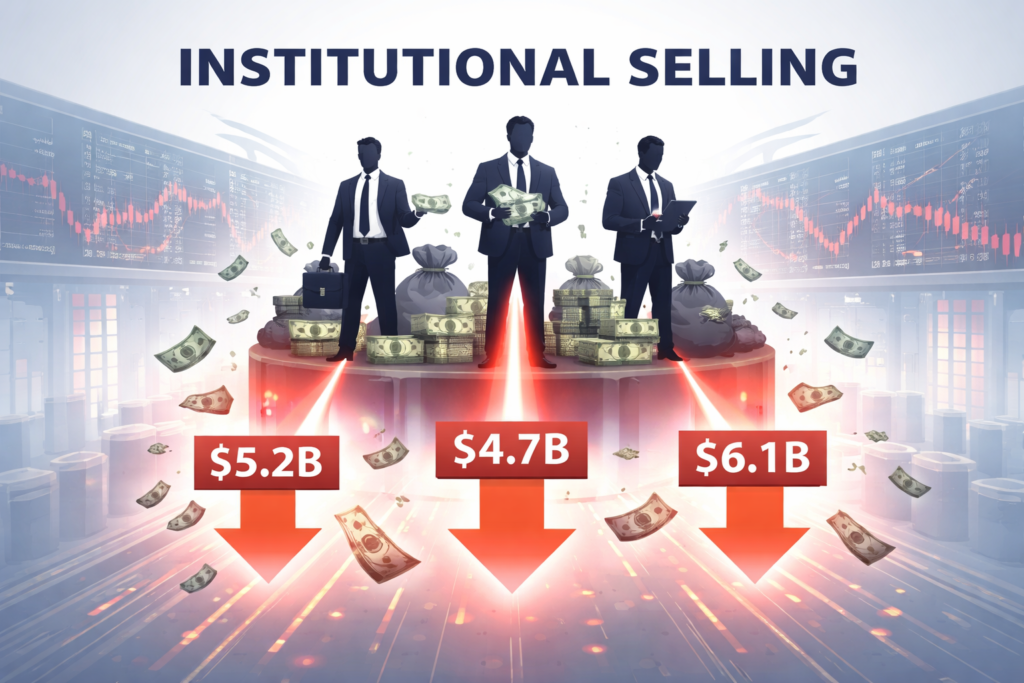
Foreign Institutional Investors (FIIs) control massive capital.
When global risk increases:
👉 FIIs pull money out of emerging markets like India.
This creates sudden pressure.
Even if fundamentals are strong.
🧠 Story: The Silent Exit
Person B sees the market falling and thinks:
“Let me buy the dip.”
Person C, a professional trader, sees something else:
“Liquidity is leaving.”
Person C exits.
Person B enters.
That’s how retail traders get trapped.
📉 Sector Wise Breakdown
🏦 Banking Sector
Banks react strongly to economic uncertainty.
- Interest rate pressure
- Credit risk
- Global instability
Result: Selling pressure.
💻 IT Sector
IT depends heavily on global demand.
- US slowdown fear
- Dollar movement
- Reduced tech spending
Result: Weakness in IT stocks.
🛍️ FMCG Sector
Usually defensive, but:
- Inflation reduces demand
- Raw material cost increases
🏗️ Metal & Infrastructure
Highly dependent on global demand.
War + slowdown = lower demand expectation.
🧠 Market Psychology: The Real Game
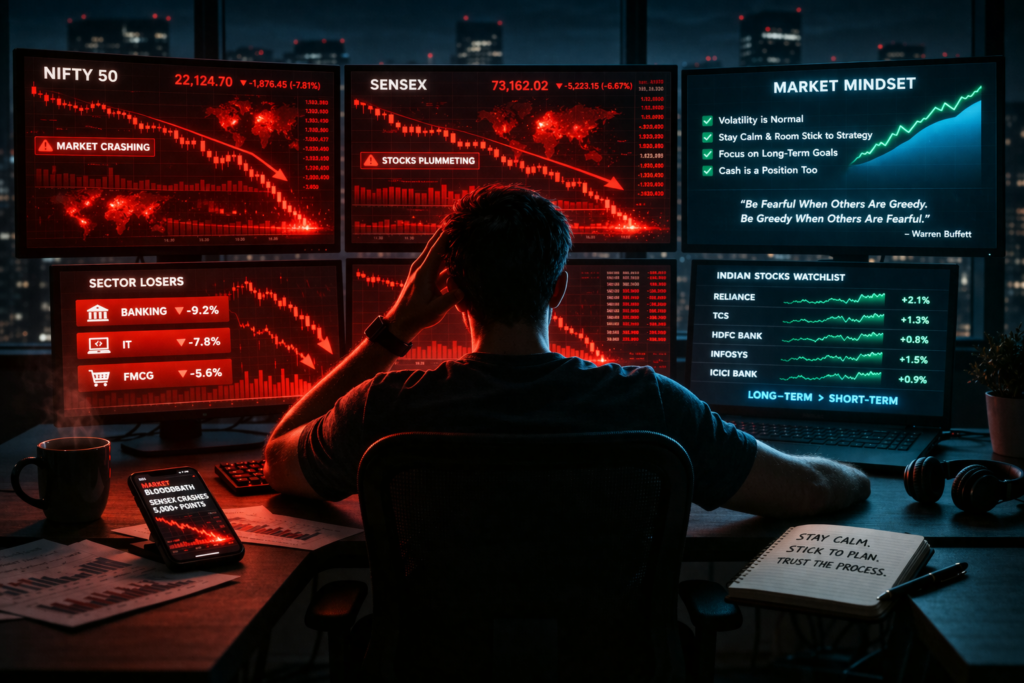
Markets are not just numbers.
They are emotions.
Today’s emotional cycle:
- Big players sell
- Market starts falling
- Retail traders panic
- More selling happens
This creates a loop:
👉 Fear → Selling → More Fear → Collapse
📊 Technical Analysis View
From a technical perspective:
- Support levels were broken
- Moving averages lost strength
- Volume confirmed selling
Indicators like:
- RSI showed weakness
- Price below key averages
⚠️ Correction vs Crash
Many people think:
“Market crash ho gaya”
But let’s be clear.
👉 This is a correction, not a crash (for now)
Difference:
| Correction | Crash |
|---|---|
| 5–10% fall | 20%+ fall |
| Healthy | Dangerous |
| Opportunity | Panic |
🧠 Smart Trader Strategy
Instead of reacting emotionally:
Do this:
✔ Wait for confirmation
✔ Watch institutional behavior
✔ Avoid overtrading
✔ Protect capital
📖 Story: The Patient Trader
Person X didn’t trade.
He watched.
He waited.
While others lost money, he gained clarity.
And clarity is the most powerful edge in trading.
🔮 What Can Happen Next?
Scenario 1:
Market continues falling (if war escalates)
Scenario 2:
Market stabilizes (if global news improves)
Scenario 3:
Sideways consolidation
📊 Long-Term View
Short-term noise doesn’t change long-term trend.
India still has:
- Strong economic growth
- Digital expansion
- Domestic consumption
🧠 Final Story
Three traders.
- Person A reacted → lost money
- Person B waited → survived
- Person C understood → profited
📌 Key Market Insight (AI Summary)
- NIFTY 50 fell due to global uncertainty and institutional selling
- War tensions increased oil prices and inflation risk
- FII outflow triggered broad market weakness
- Banking and IT sectors led the decline
- Market sentiment turned risk-off
Source: InvesLogic Market Analysis